COVENTRY UK
COVENTRY
HomeLaboratorySoil Mechanics Study

Soil Mechanics Study in Coventry – Geotechnical Analysis for Stable Foundations

Evidence-based design. Reliable delivery.

LEARN MORE

Coventry sits on a varied geology of glacial till, river terrace gravels, and mudstone bedrock from the Mercia Mudstone Group. The region's high annual rainfall – around 650 mm – saturates the upper soil layers, reducing bearing capacity and increasing shrink-swell risk. A soil mechanics study in Coventry must account for these moisture-sensitive clays. Before designing foundations, we recommend integrating a georadar survey to map subsurface anomalies without excavation. This initial scan helps target borehole locations efficiently, saving time and reducing uncertainty. The combination of geophysics and direct sampling gives a complete picture of ground conditions under the city's streets.
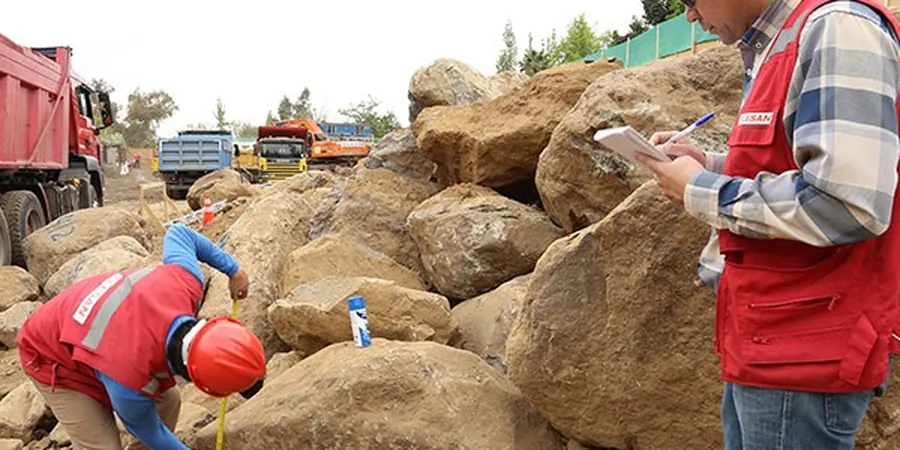
Illustrative image of Soil mechanics study in Coventry
Coventry's glacial till can vary from stiff clay to loose sand within metres – a soil mechanics study captures that variability before construction begins.

Our service areas

Process overview

Soil behaviour differs markedly between Coventry's northern suburbs, like Allesley, and the city centre. In Allesley, glacial till deposits contain cobbles and stiff clay; near the University of Warwick, river terrace sands dominate. A soil mechanics study in Coventry must characterise these variations. Our approach follows BS 5930:2015 for site investigation and Eurocode 7 for design parameters. We measure natural moisture content, Atterberg limits, and undrained shear strength using triaxial testing. For granular soils, we run direct shear tests and particle size distribution. Each borehole log includes SPT N-values correlated to relative density. The data feeds directly into foundation design, slope stability analysis, and settlement predictions. We also assess sulphate content and pH to evaluate concrete aggressivity. This level of detail is essential for Coventry's mixed ground conditions.
Technical reference — Coventry

Local context

A common mistake among developers in Coventry is assuming uniform ground across a site. The city's complex glacial history creates lenses of sand and gravel within clay layers. Without a thorough soil mechanics study in Coventry, these pockets go undetected. The result? Differential settlement cracks in new housing estates, or unexpected groundwater inflows during excavation. One site near the Ring Road required emergency redesign after a foundation trench hit a buried channel of soft sand. The cost of reworking footings far exceeded the initial investigation. A proper study identifies these hazards early. It saves money, prevents delays, and keeps construction on schedule. Ignoring the ground is not an option in Coventry.

Need a geotechnical assessment?

Reply within 24h.

Email: contact@geotechnical-engineering.biz

Reference standards


BS 5930:2015 Code of practice for ground investigations, Eurocode 7 (BS EN 1997-1:2004) Geotechnical design, BS 1377-2:1990 Methods of test for soils – classification tests, BS 1377-2 Standard test methods for liquid limit, plastic limit, and plasticity index

Technical parameters

ParameterTypical value
Natural moisture content18 – 35 %
Liquid limit (LL)45 – 70 %
Plasticity index (PI)20 – 40 %
Undrained shear strength (cu)40 – 120 kPa
SPT N-value (clay)8 – 25 blows/300mm
Angle of internal friction (sand)28 – 35°
Coefficient of volume compressibility (mv)0.05 – 0.25 m²/MN

Top questions


What is the typical cost of a soil mechanics study in Coventry?

For a standard residential plot (2–4 boreholes at 5–10 m depth), the cost ranges between £2,380 and £4,380. This includes fieldwork, laboratory testing, and a interpretative report. Larger commercial sites require a bespoke quotation.

How long does a soil mechanics study take in Coventry?

A typical study takes 3 to 5 weeks. Fieldwork is completed in 2–3 days. Laboratory testing takes another 2–3 weeks. The final report is issued within 5 working days after all results are received.

Do I need a soil mechanics study for a single house extension in Coventry?

Yes, if the extension involves new foundations or significant excavation. Coventry's clay soils are prone to shrinkage and swelling. Building control often requires a geotechnical assessment to confirm foundation depth and type.

What is the difference between a soil mechanics study and a site investigation?

A site investigation is the field campaign – drilling, sampling, and In-Situ. A soil mechanics study includes that plus laboratory analysis, interpretation, and design parameters. The study delivers the numbers engineers need to calculate bearing capacity, settlement, and slope stability.

Location and service area

We serve projects across Coventry.

Location and service area