COVENTRY UK
COVENTRY
HomeRoadwayRoad Embankment Design

Road Embankment Design for Coventry: Geotechnical Expertise for Stable Infrastructure

Evidence-based design. Reliable delivery.

LEARN MORE

A common mistake contractors make around Coventry is assuming the local Mercia Mudstone provides a uniform, stable base for road embankments. The reality is more complex — these mudstones can be highly variable, with weathered zones near the surface that lose strength rapidly when exposed to water. Without proper geotechnical investigation, an embankment built on this material may experience differential settlement or even a rotational failure within the first few years. That is why a detailed site assessment, including a permeability field test to understand drainage behavior, is essential before any fill is placed.
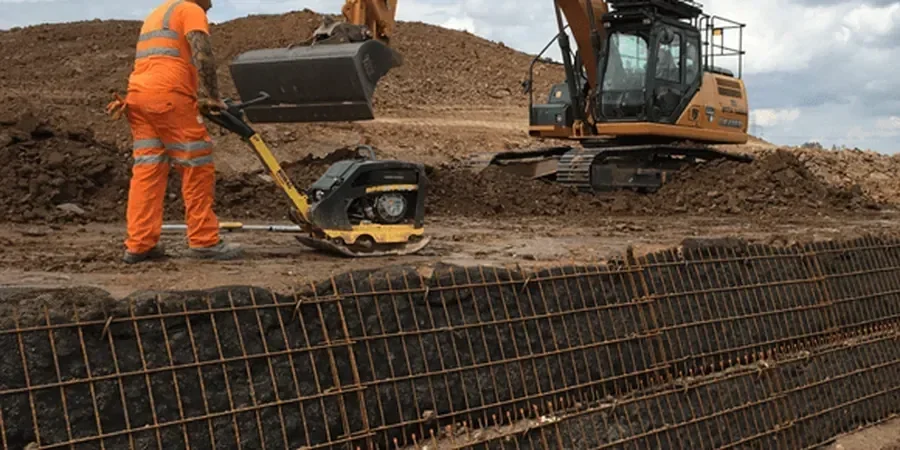
Illustrative image of Road embankment design in Coventry
The Mercia Mudstone under Coventry can lose over 50% of its shear strength when saturated, making drainage design a non-negotiable part of embankment stability.

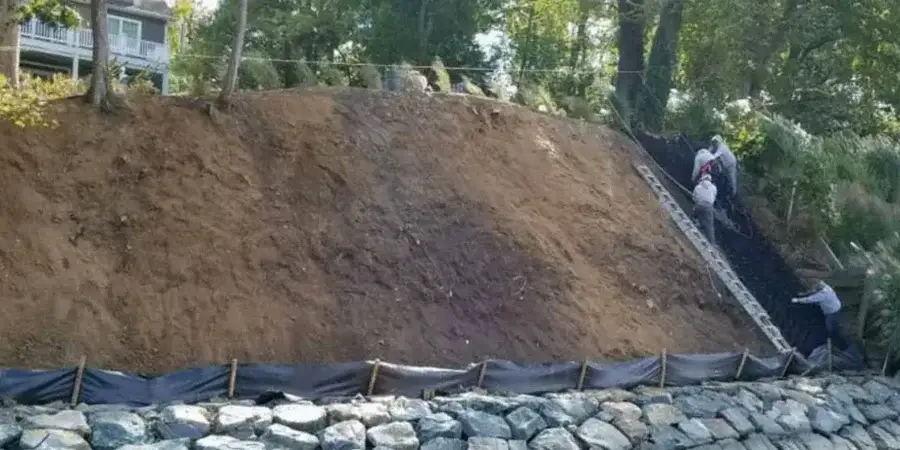
Our service areas

Process overview

The contrast between the sandy glacial deposits in the northeast suburbs near Walsgrave and the stiff clays around the city centre tells you everything about Coventry's geological complexity. For road embankment design, each zone demands a tailored approach. In the east, where granular soils dominate, drainage is less of a concern but compaction control becomes critical to avoid post-construction settlement. Downtown, the clays can be prone to swelling, so incorporating geotextiles for separation between fill and natural ground is a common solution. The key is to match the embankment geometry and reinforcement to the actual soil profile, not a generic assumption.
Technical reference — Coventry

Local context

Coventry's post-war reconstruction saw large-scale earthmoving across the city, with many embankments built rapidly using locally sourced fill. Unfortunately, compaction control was often minimal, and drainage layers were skipped. Today, several of those older embankments show signs of distress — cracking along crests, bulging at the toe, and in a few cases, shallow slip surfaces after heavy rain. The lesson is clear: short-term savings on ground investigation and compaction testing lead to long-term maintenance liabilities. Modern road embankment design in Coventry must account for these historical failures and apply current geotechnical standards to prevent repetition.

Need a geotechnical assessment?

Reply within 24h.

Email: contact@geotechnical-engineering.biz

Reference standards


BS 6031:2009 – Code of practice for earthworks, Eurocode 7 (BS EN 1997-1:2004) – Geotechnical design, Highways England Manual of Contract Documents for Highways Works (MCHW) Series 600

Technical parameters

ParameterTypical value
Embankment height range2 – 15 m
Side slope inclination1:2 (26.6°) typical for clay fills
Fill material compacted density1.8 – 2.2 t/m³ (Proctor optimum)
Minimum factor of safety (static)1.5 (Eurocode 7 Design Approach 1)
Maximum foundation bearing pressure150 – 300 kPa depending on Mercia Mudstone grade

Top questions


What soil conditions are typical for road embankment design in Coventry?

Coventry's ground is dominated by the Mercia Mudstone Group, a Triassic sedimentary rock that weathers to a stiff clay near the surface. Glacial sands and gravels are found in the northeast, while river terrace deposits line the River Sowe valley. Each material behaves differently under load, so a site-specific investigation is necessary.

What slope angle is recommended for a stable embankment in this area?

For most fills in Coventry, a side slope of 1:2 (vertical to horizontal) is a starting point. If the foundation is weak or the fill is clay, shallower slopes around 1:3 may be required to achieve a factor of safety above 1.5. Steeper slopes can be used with geogrid reinforcement, but only after a detailed stability analysis.

How does drainage affect road embankment design?

Drainage is arguably the most critical element. Water reduces shear strength in both the fill and foundation. In Coventry's clay areas, poor drainage has caused several historic embankment failures. We always design a drainage blanket at the base, with toe drains and surface water collection to keep pore pressures low.

How much does a road embankment design study in Coventry cost?

For a typical project, the geotechnical investigation and design report range between £870 and £3.060 depending on embankment height, site access, and the number of boreholes required. A detailed quote is provided after an initial site walkover.

Location and service area

We serve projects across Coventry.

Location and service area