COVENTRY UK
COVENTRY
HomeFoundationsBearing Capacity Analysis

Bearing Capacity Analysis in Coventry – Geotechnical Assessment for Safe Foundations

Evidence-based design. Reliable delivery.

LEARN MORE

In Coventry, we see many foundation schemes struggle because the superficial geology — glacial till overlying Mercia Mudstone — varies abruptly across short distances. A bearing capacity analysis in Coventry must therefore account for both the stiff, overconsolidated clay behaviour of the till and the weathering profile of the underlying sandstone. We routinely combine plate load testing with empirical correlations from SPT testing to derive a realistic allowable bearing pressure, rather than relying on generic published tables that can overestimate capacity in the weaker lenses common near the River Sowe corridor.
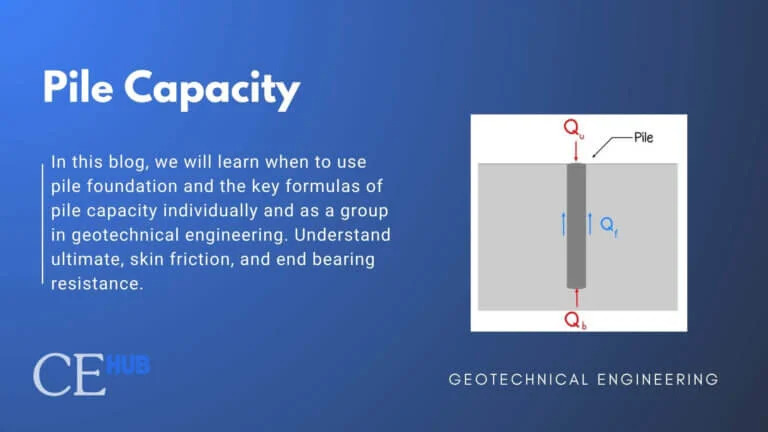
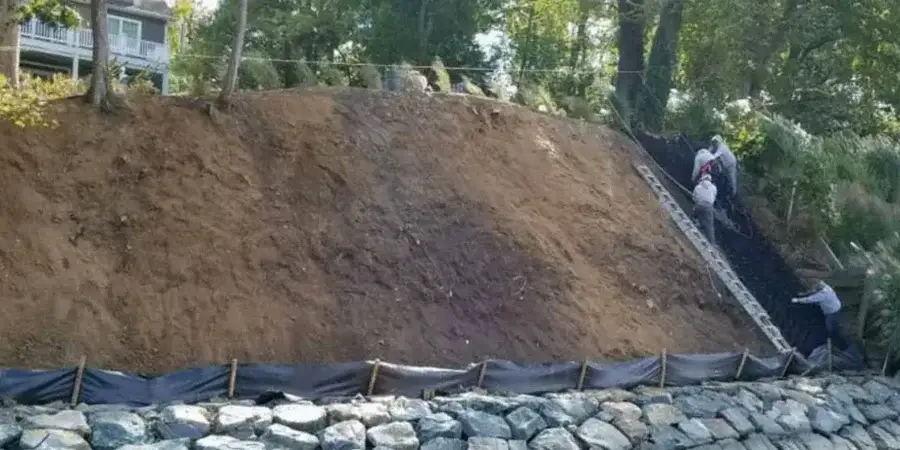
Illustrative image of Bearing capacity analysis in Coventry
A bearing capacity analysis in Coventry must account for the rapid lateral variation of glacial till and Mercia Mudstone weathering profiles, which can shift allowable bearing pressures by 40% across a single site.

Our service areas

Process overview

Our field team mobilises a 20-tonne tracked excavator equipped with hydraulic plate load frames compliant with BS 1377-9:1990. For bearing capacity analysis in Coventry, we typically carry out tests at foundation formation level using 300 mm to 600 mm diameter plates, recording settlement increments under maintained load. The load is applied via a calibrated hydraulic jack reacting against a kentledge beam or, when access is tight, against soil anchors. We also extract undisturbed block samples for triaxial testing, and we cross-reference the results with MASW-Vs30 profiles to confirm the shear-wave velocity model used in the seismic bearing resistance check under Eurocode 7. This dual approach — direct plate tests plus geophysical profiling — is particularly valuable in Coventry where the depth to rockhead can change by three metres within a single plot.
Technical reference — Coventry

Local context

Eurocode 7 (BS EN 1997-1:2004) requires that the bearing resistance of a foundation be verified against both ultimate and serviceability limit states, and in Coventry the governing failure mode is often eccentric loading on stiff clay. The risk is that differential settlement — not total settlement — exceeds the 25 mm threshold typical for masonry structures in the city centre. We therefore run a settlement analysis using the elastic stiffness from the plate test, and we compare it to a 2D finite-element model that includes the lateral variability of the till. This is where a thorough bearing capacity analysis in Coventry prevents costly over-design or, worse, post-construction remedial work.

Need a geotechnical assessment?

Reply within 24h.

Email: contact@geotechnical-engineering.biz

Reference standards


BS EN 1997-1:2004 (Eurocode 7 – Geotechnical design), BS 1377-9:1990 (Methods of test for soils – in-situ plate loading), BS 5930:2015 (Code of practice for ground investigations)

Technical parameters

ParameterTypical value
Plate diameter300 mm / 600 mm (standard)
Maximum applied load200 kN (with kentledge)
Settlement measurement accuracy±0.01 mm (LVDT transducers)
Test duration per cycle2–4 hours (maintained load stages)
Allowable bearing pressure range (typical Coventry till)150–350 kPa (serviceability limit state)
Seismic bearing resistance factor (EC7)γR;v = 1.4 (persistent design situation)

Top questions


What is the typical allowable bearing pressure for foundations in Coventry?

For the glacial till that underlies most of Coventry, the allowable bearing pressure at the serviceability limit state typically falls between 150 and 350 kPa, depending on the thickness of the stiff clay and the presence of sand or gravel lenses. A site-specific plate load test is always recommended because the Mercia Mudstone weathering profile can reduce capacity by up to 40% in the weathered zone.

How does a bearing capacity analysis differ from a standard SPT investigation?

A standard SPT investigation provides a blow count (N-value) that can be correlated to bearing capacity, but it does not directly measure settlement behaviour under a real foundation load. A bearing capacity analysis uses plate load testing to measure the actual load-settlement curve, which gives a more reliable allowable bearing pressure for the specific founding depth and ground conditions. We often run both methods in parallel to cross-validate results.

What is the cost range for a bearing capacity analysis in Coventry?

For a typical residential or small commercial site in Coventry, the cost of a bearing capacity analysis — including one plate load test, site mobilisation, and a report — ranges from £570 to £1,340. The variation depends on access constraints, the number of test locations, and whether additional laboratory testing (e.g., triaxial on undisturbed samples) is required.

Does the bearing capacity in Coventry change with depth?

Yes, significantly. The glacial till in Coventry is typically stiff at surface but can become soft or medium stiff in the upper 2–3 metres where it is desiccated or weathered. Below that, the Mercia Mudstone hardens rapidly, and bearing pressures can exceed 600 kPa. A bearing capacity analysis that only tests at one depth may miss a soft layer at 1.5 m that controls the design. We recommend testing at multiple depths or combining the plate test with a CPT profile to capture the vertical variability.

Visual overview

Location and service area

We serve projects across Coventry.

Location and service area