COVENTRY UK
COVENTRY
HomeSeismicBase Isolation Seismic Design

Base Isolation Seismic Design in Coventry: Geotechnical Foundation Analysis

Evidence-based design. Reliable delivery.

LEARN MORE

Base isolation seismic design in Coventry follows Eurocode 7 and BS EN 1997-1:2004, requiring a precise understanding of local soil stratigraphy. The city sits on a mix of glacial till, river terrace gravels, and Mercia Mudstone bedrock, creating variable stiffness profiles that directly influence isolation system tuning. Without accurate vs30/" data-interlink="1">shear wave velocity data, the isolation layer may be detuned and the building response compromised. Before specifying isolators, our team performs MASW-Vs30 surveys to map the shear wave velocity profile across the site, and cross-checks results with a deep soil mixing study when soft lenses are encountered. This integrated approach ensures the isolation frequency aligns with the actual ground motion spectrum in Coventry.
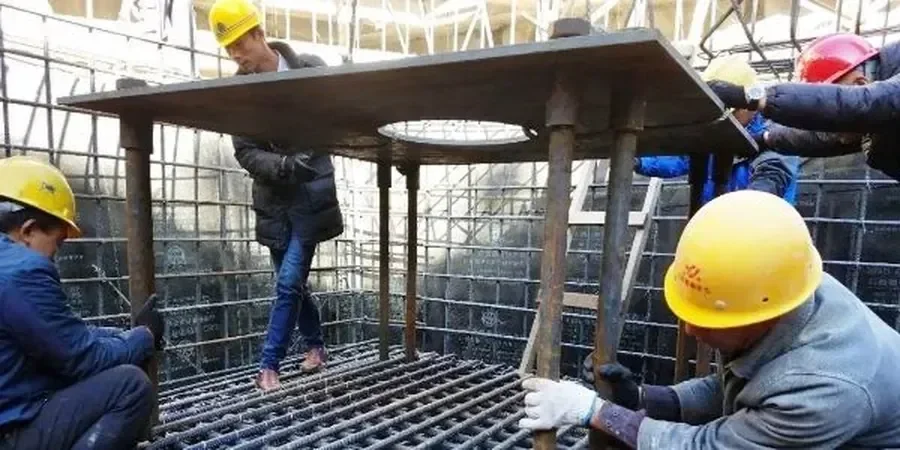
Illustrative image of Base isolation seismic design in Coventry
Coventry's variable glacial till and alluvial soils require site-specific Vs30 profiles to avoid detuning the isolation system and compromising seismic performance.
Our service areas

Process overview

Soil conditions differ substantially between Coventry's city centre and its suburban fringes. Near the University of Warwick campus, stiff glacial till overlies weathered sandstone, while areas around Binley Woods show deeper soft alluvial clays. These contrasts demand site-specific base isolation seismic design rather than blanket code parameters. Our process includes three core steps:
  • Advanced geophysical profiling (MASW, ReMi) to determine the Vs30 value and NEHRP site class
  • Laboratory resonant-column tests on undisturbed samples to measure shear modulus degradation curves
  • Nonlinear dynamic analysis using site-specific acceleration time histories scaled to UK seismic hazard
For retrofit projects in older Coventry buildings, we also conduct a preload/surcharge study to assess foundation settlement under the added mass of the isolation system. Each design is calibrated to the local soil column and the building's natural period.
Technical reference — Coventry

Local context

Coventry's climate contributes to seasonal moisture changes in the upper soil layers, altering the stiffness of the ground immediately below the isolation plane. Wet winters followed by dry summers can cause clay soils to swell and shrink, shifting the effective bearing layer and modifying the isolation system's period. This is especially risky in areas like Stoke Heath and Foleshill, where high-plasticity clays are common. Our base isolation seismic design accounts for these moisture-driven stiffness variations by modelling degraded shear modulus under worst-case saturation. We also run a slope stability analysis if the site is near any cut or fill, ensuring the entire soil-foundation-isolation system remains stable under cyclic loading.

Need a geotechnical assessment?

Reply within 24h.

Email: contact@geotechnical-engineering.biz

Reference standards


BS EN 1997-1:2004 (Eurocode 7 – Geotechnical design), BS EN 1998-1:2004 (Eurocode 8 – Seismic design of structures), NEHRP Recommended Seismic Provisions (FEMA P-1050), ASCE 7-16 – Minimum Design Loads for Buildings (site class definition)

Technical parameters

ParameterTypical value
Vs30 target range for isolation design180–360 m/s (site class C–D)
Target isolation period2.0–3.5 seconds
Design basis earthquake (DBE) return period475 years (UK seismic hazard map)
Maximum considered earthquake (MCE) return period2475 years
Shear modulus reduction (G/Gmax) at design strain0.6–0.85 (per Darendeli 2001 model)
Damping ratio of isolation system10–20% (elastomeric bearings)

Top questions


What soil conditions in Coventry most affect base isolation seismic design?

The main factors are the depth and stiffness of glacial till versus alluvial clay layers. Sites with deep soft clay (e.g., near the River Sowe) require longer isolation periods and larger bearing pads to accommodate higher lateral displacements. Sites on stiff till (e.g., city centre) allow shorter periods but need careful checking of the soil–structure interface.

How much does a base isolation seismic design study typically cost in Coventry?

A full geotechnical and structural study for base isolation in Coventry ranges between £3,710 and £6,310, depending on the number of boreholes, laboratory tests, and dynamic analyses required. Costs increase for retrofit projects involving existing foundations.

What standards govern base isolation seismic design in the UK?

The primary standards are Eurocode 7 (BS EN 1997-1:2004) for geotechnical aspects and Eurocode 8 (BS EN 1998-1:2004) for seismic design of structures. Additional guidance comes from NEHRP (FEMA P-1050) for site classification and ASCE 7 for isolation system detailing.

Can base isolation be added to existing buildings in Coventry?

Yes, but it requires a thorough retrofit feasibility study. The existing foundation must be strong enough to transfer loads through the new isolators, and the soil beneath must be characterised for current stiffness and settlement potential. We always run a preload/surcharge test before final design.

Location and service area

We serve projects across Coventry.

Location and service area