COVENTRY UK
COVENTRY
HomeImprovementDeep Soil Mixing Design

Deep Soil Mixing Design in Coventry – Geotechnical Improvement

Evidence-based design. Reliable delivery.

LEARN MORE

Deep Soil Mixing (DSM) design in Coventry follows Eurocode 7 (BS EN 1997-1:2004) and BS 5930 for ground investigation. Coventry’s geology is dominated by glacial till – stiff clays with occasional sand lenses – which respond well to mechanical mixing with cementitious binders. Before specifying a DSM pattern, we run a clasificación de suelos to assess plasticity, and often cross-check with an ensayo SPT to verify strength profiles. The method is particularly effective here because the till’s low permeability limits groundwater interference during mixing. We design column layouts, binder dosage, and curing times based on target unconfined compressive strength (UCS), typically 0.5–2.0 MPa for foundation applications.
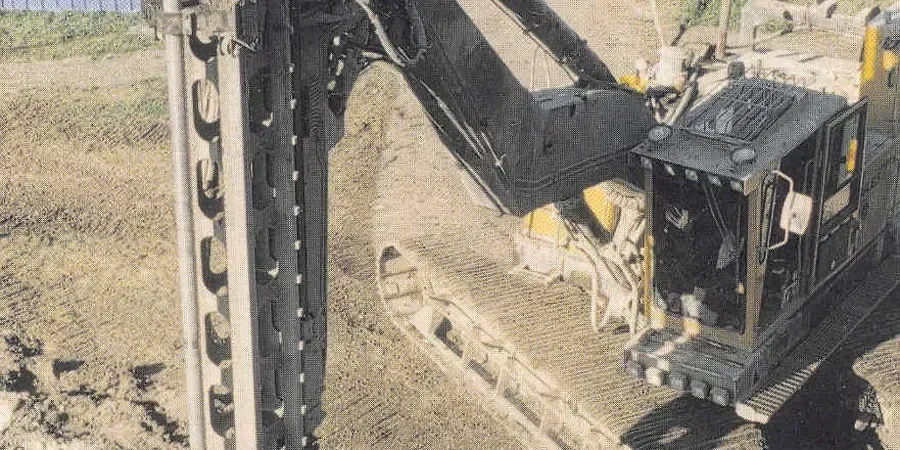
Illustrative image of Deep Soil Mixing (DSM) design in Coventry
DSM in glacial till achieves UCS of 0.5–2.0 MPa with proper binder dosage – a reliable alternative to excavation and replacement.


Our service areas

Process overview

Coventry’s post-war reconstruction and subsequent urban infill left a patchwork of made ground over glacial till. Many sites contain buried foundations, old services, or variable fill that complicates conventional piling. Deep Soil Mixing (DSM) treats the ground in situ – no excavation, no vibration. We use a hollow-stem auger with binder injection ports, rotating at controlled speed and torque. The process creates soil-cement columns with improved stiffness and reduced permeability. For deeper treatment we pair DSM with pilotes to transfer loads through soft layers. Where groundwater is near surface, a permeabilidad-campo test beforehand helps set the binder water-cement ratio. The system suits Coventry’s tight urban sites: low noise, low spoil, minimal disruption to neighbours.
Technical reference — Coventry

Local context

In Coventry, we often see that old fill layers contain brick fragments and ash that react unpredictably with binder. A poor site investigation leads to variable column strength – some zones cure hard, others stay soft. Another local risk is groundwater perched on the till’s upper surface after heavy rain. If mixing takes place in saturated conditions, binder wash-out occurs and strength drops. We mitigate this by performing a ensayo cpt to define soil layers and water content profile before design. DSM columns must also be tested – we recommend core sampling at 1 per 500 columns to verify UCS. Ignoring these checks can result in differential settlement under slab loads.

Need a geotechnical assessment?

Reply within 24h.

Email: contact@geotechnical-engineering.biz

Reference standards


BS EN 1997-1:2004 (Eurocode 7 – Geotechnical design), BS 5930:2015 (Code of practice for ground investigations), BS EN ISO 22476-3 (SPT – used for baseline stratigraphy)

Technical parameters

ParameterTypical value
Column diameter0.6–1.2 m
Depth range3–25 m
Binder content150–350 kg/m³ (cement or cement-slag blend)
Target UCS (28 days)0.5–2.0 MPa
Area replacement ratio15–40 %
Typical spacing (c/c)1.5–2.5 m

Top questions


What are the typical costs for Deep Soil Mixing design in Coventry?

For a standard DSM design package in Coventry, expect costs between £1.490 and £4.840 depending on site area, column count, and testing scope. This includes binder dosage calculations, layout drawings, and settlement analysis. Larger volumes reduce the per-column cost.

How deep can DSM columns go in Coventry’s glacial till?

Standard equipment reaches 25 m in stiff till. Beyond that, torque and penetration rate drop significantly. For deeper requirements we recommend combining DSM with driven piles or transitioning to a full-depth piling solution. We always verify depth limits with a trial column before full production.

What testing confirms DSM column quality on site?

We use core sampling (100 mm diameter) and unconfined compression tests at 7, 14, and 28 days. For large projects, we also run column integrity testing (CIT) with low-strain impact to check continuity. Laboratory UCS results are compared against design targets; any column below 80% of target is replaced or supplemented.

Location and service area

We serve projects across Coventry.

Location and service area